What's Today's Percentage of the Year? How to Calculate and Use It
03/20/2026
Ever just stop and think about how far we actually are into the year? Not in that vague "wow, it's already March" kind of way, but exactly how far? There's a simple number that puts everything in perspective: the percentage of the year that's already behind us. It takes this slippery thing we call time and turns it into something you can actually see, track, and—honestly—use.
📸 Visualizing Today's Progress
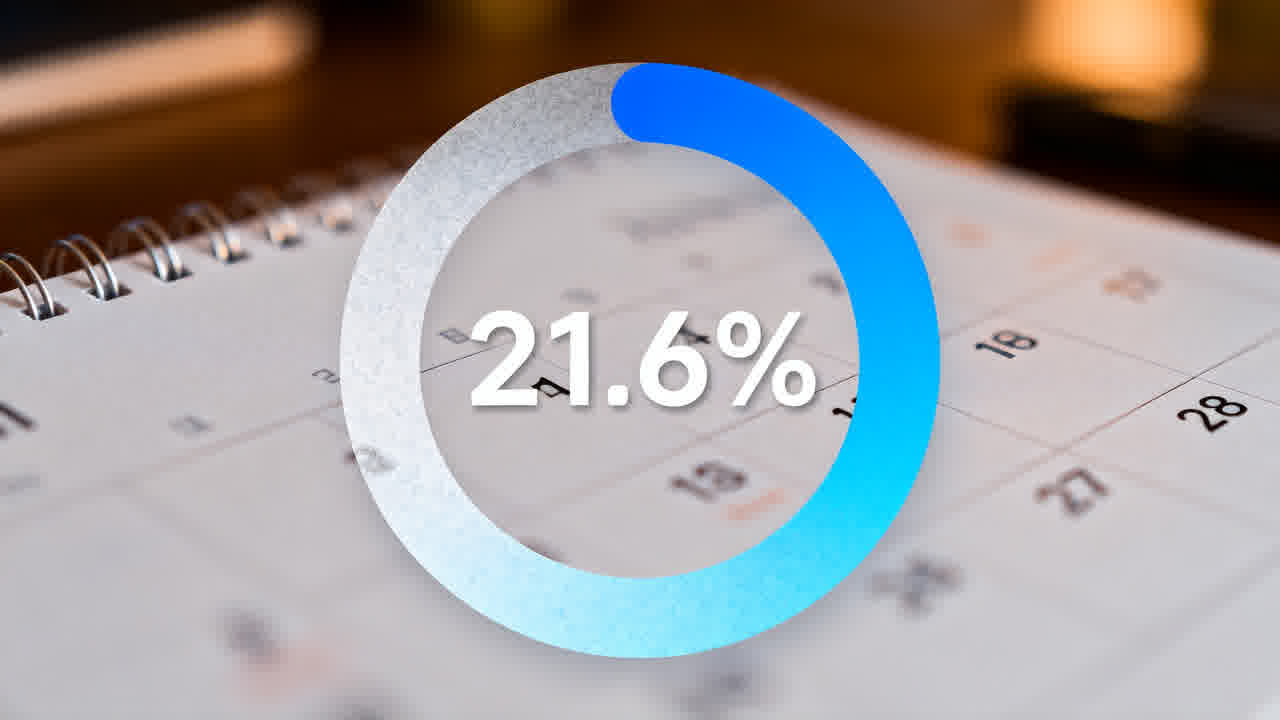
In this guide, we'll explore what the percentage of the year means, how to figure it out in about ten seconds (without breaking a sweat), and a few surprisingly practical ways to make it work for you. Plus, we'll look at how this percentage of the year concept applies to U.S. holidays, leap years, and everyday goal setting.
So What Exactly Is the Percentage of the Year?
Pretty straightforward. The percentage of the year is just how much of the year has passed so far, shown as a percentage.
A normal year has 365 days. Leap year? 366. So once you know what day number it is—January 1 is day 1, December 31 is day 365 (or 366)—you can see exactly where you stand.
Think of it this way:
- January 1? You're at basically 0%.
- Sometime around July 1? That's the 50% mark.
- December 31? Boom—100% of the percentage of the year done.
Simple enough. But here's where it gets interesting.
Why Track the Percentage of the Year?
I'll be honest—I started checking this percentage of the year out of curiosity. But it turned into something I actually use. Here's why.
For Personal Goals
- Goal tracking that actually works. Say you're saving for a house or training for a marathon. If you're 40% through the year but only 20% through your goal... yeah, that's a reality check you might need. Keeping an eye on the percentage of the year helps you stay accountable.
- Keeps time from slipping away. You know how some years just vanish? Checking this number regularly makes you pay attention. It's amazing how motivating a simple percentage of the year can be.
For Work and Business
- Makes big projects feel manageable. Break your annual work targets into chunks based on the percentage of the year. Aim to finish 25% of your project by the time the year is 25% done. This works for freelancers, teams, and solo entrepreneurs alike.
- Makes you stop and think. When you see you're at 75% of the percentage of the year, it naturally makes you ask: "Am I spending my time on what I actually care about?"
Let's make this real for U.S. readers:
- Freelancers and small biz owners: April 15 (Tax Day) hits at about 28.8% of the year. Handy little checkpoint for those quarterly estimated taxes. You can use the percentage of the year to plan your tax payments.
- Summer planners: By Memorial Day (late May, roughly 41% in), you've still got plenty of year left for that road trip. But maybe stop procrastinating? The percentage of the year can be your travel planning buddy.
- Students: Heading back to school in late August or early September? You're at the ~66% mark—perfect timing to reassess those fall semester goals before the holiday chaos.
See what I mean? This little number—the percentage of the year—makes "time flying by" feel a lot more concrete.
How to Calculate the Percentage of the Year
Here's the formula. It's dead simple, and once you know it, you can calculate the percentage of the year anytime.
The Simple Formula
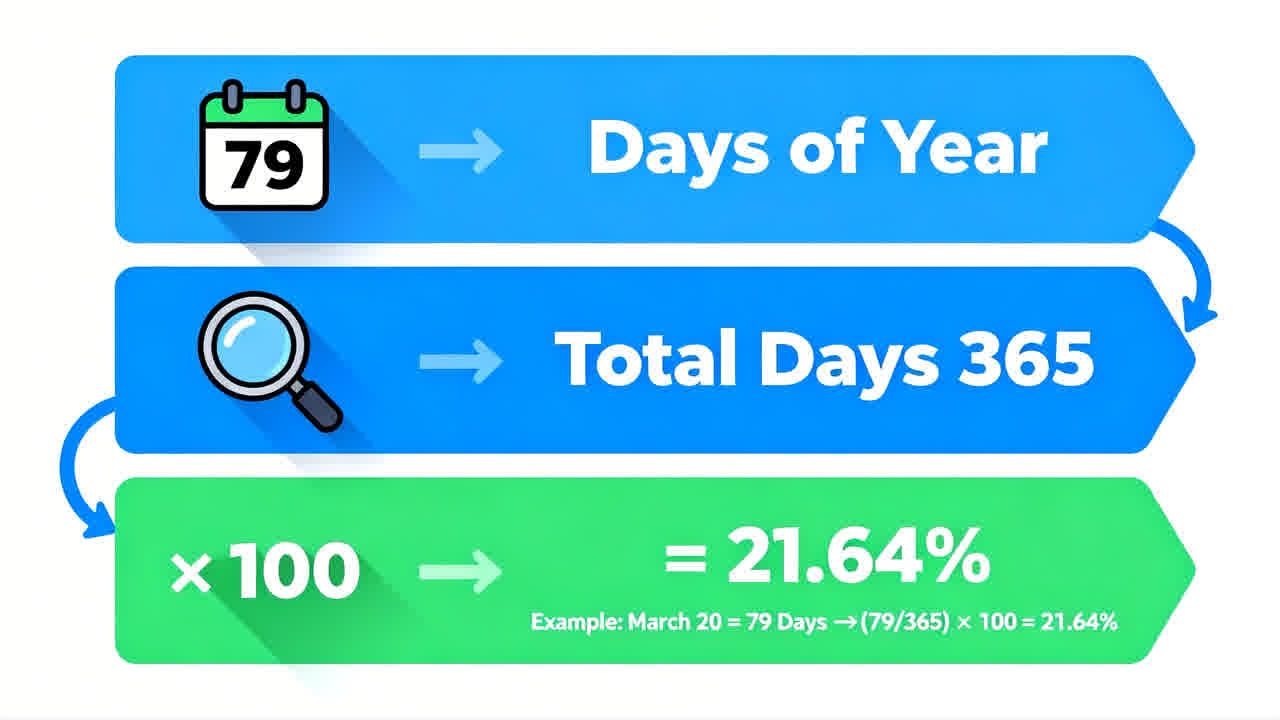
Two steps and you're done:
- Get today's day number. (Day 1 = January 1, Day 365 = December 31 in a normal year.)
Pro tip: Just Google "day of the year" and it'll show you the current number instantly. No math required. - Divide by 365 (or 366 if it's a leap year), then multiply by 100.
Step-by-Step Example
Say today's March 20 in a non‑leap year.
- Day of the year: 79
- Total days: 365
Math time:
So 21.6% of the year is gone, and you've got about 78.4% left. Feels different when you see it as a number, right? That's the power of knowing the percentage of the year.
A Few More U.S. Dates to Give You a Feel
| Date | Day of Year | Percentage of the Year (Non‑Leap) |
|---|---|---|
| Valentine's Day (Feb 14) | 45 | 12.3% |
| St. Patrick's Day (Mar 17) | 76 | 20.8% |
| Independence Day (Jul 4) | 185 | 50.7% |
| Halloween (Oct 31) | 304 | 83.3% |
| Thanksgiving (Nov 28) | 332 | 91.0% |
Notice how by Halloween you're already past 80% of the percentage of the year? Yeah. Time moves.
📊 Visual Aid: How to Calculate It in Three Steps
How Leap Year Affects the Percentage of the Year
Short answer: yes, but barely.
In a leap year, February 29 shows up, so you've got 366 days total. That means each day is a tiny bit smaller slice of the percentage of the year.
Take March 1:
- Normal year: 60 days ÷ 365 ≈ 16.44%
- Leap year: 61 days ÷ 366 ≈ 16.67%
The difference? About 0.23 percentage points. For everyday stuff—goals, planning, curiosity—it basically doesn't matter. But if you're the type who likes things precise, now you know. You can always use our percentage of the year calculator to get the exact percentage of the year for any date in a leap year.
📊 Visual Aid: Leap Year vs. Common Year Comparison
Percentage of the Year for Major U.S. Holidays
Here's how some familiar U.S. dates stack up in a non‑leap year. (For floating holidays like Memorial Day, the day number shifts—but these give you the ballpark.) Use this table to quickly find the percentage of the year for key moments.
Key Dates and Their Percentages
| Date / Event | Day of Year (approx.) | Percentage of the Year |
|---|---|---|
| New Year's Day (Jan 1) | 1 | 0.3% (fresh start) |
| Valentine's Day (Feb 14) | 45 | 12.3% |
| St. Patrick's Day (Mar 17) | 76 | 20.8% |
| Tax Day (Apr 15) | 105 | 28.8% |
| Mother's Day (second Sun in May) | ~130 | ~35.6% |
| Memorial Day (last Mon in May) | ~150 | ~41.1% |
| Independence Day (Jul 4) | 185 | 50.7% |
| Labor Day (first Mon in Sep) | ~245 | ~67.1% |
| Halloween (Oct 31) | 304 | 83.3% |
| Thanksgiving (fourth Thu in Nov) | ~330 | ~90.4% |
| Christmas Day (Dec 25) | 359 | 98.4% |
| New Year's Eve (Dec 31) | 365 | 100% |
Use these as mental mile markers. Hit Independence Day? You're officially over halfway in the percentage of the year. Thanksgiving? You're in the home stretch—90% done. For a complete list of holiday percentages, check out our Percentage to Date Table.
Percentage to Date Table
Frequently Asked Questions About the Percentage of the Year
Q: Okay, but is there a faster way to get today's percentage of the year without doing math every time?
A: For sure. Just Google "day of the year" and you'll get the number. Then it's one quick division. Or bookmark one of those "percentage of the year" calculators—they do it for you. Some calendar widgets even show the percentage of the year automatically.
Q: How do I actually use the percentage of the year for my New Year's resolutions?
A: Say you want to read 12 books this year. At 25% of the percentage of the year, you should be at 3 books. At 50%, 6 books. Simple checkpoints. Works for saving money, losing weight, learning a language—anything you can chunk up.
Q: Does leap year really matter for the percentage of the year when planning?
A: For most of us? Not really. That extra day shifts the percentage of the year by less than 0.3%. Unless you're running a business with daily revenue targets or you're just really into precision, don't stress about it. But if you want to be exact, use our percentage of the year.
Q: What about holidays that move around—like Thanksgiving? How do I find their percentage of the year?
A: Good question. Since they change each year, you'll need the exact day number. Just search "day of the year for Thanksgiving 2025" (or whatever year) and plug that into the formula to get the percentage of the year.
Q: Can teams actually use the percentage of the year for work stuff?
A: Yeah, totally. Some managers set quarterly OKRs based on it. By the end of Q1 (around 25% of the percentage of the year), teams should have delivered about a quarter of their annual targets. Keeps everyone honest without complicated spreadsheets.
Bottom Line: Why the Percentage of the Year Matters
The percentage of the year is one of those small numbers that somehow puts everything in perspective. It helps you see time differently, stay on track with what matters, and maybe—just maybe—stop letting years slip by unnoticed.
Check it once in a while. Tie it to the dates you actually care about. A little awareness of the percentage of the year goes a long way.